
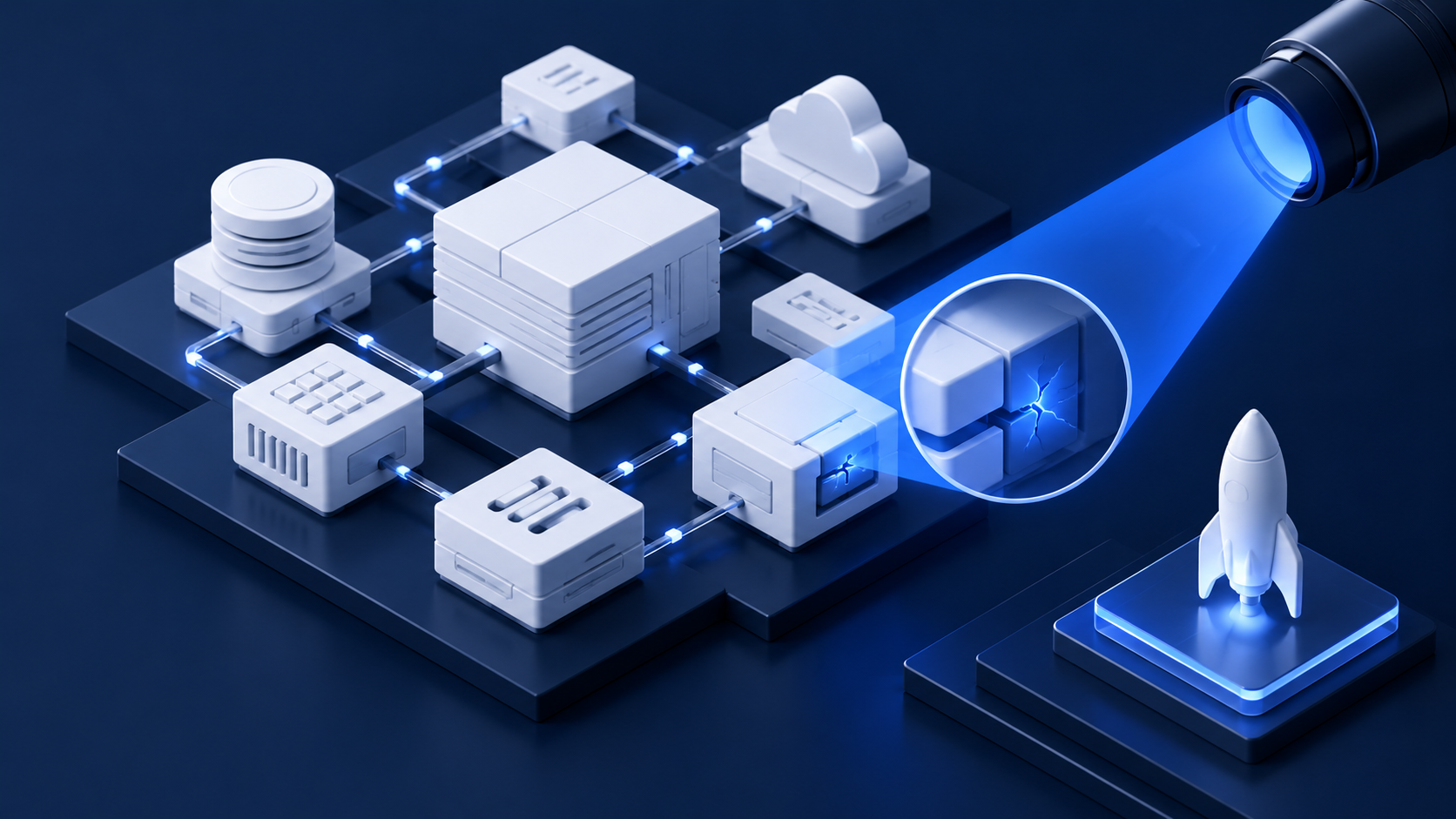
A secure product begins with decisions made before launch, then continues through testing, remediation, and maintenance.
Make security a product responsibility
Security cannot live only in a final approval step. Product, engineering, design, and leadership all influence what a system collects, exposes, and allows. Assign an owner for security decisions, define the most important assets, and decide what level of risk the organization can accept. CISA's Secure by Demand guide describes secure-by-design products as ones whose manufacturers consider security from the earliest stages of development.
Translate that principle into ordinary product work. Include security requirements in the brief, review sensitive flows during design, and make remediation part of release planning. A feature is not finished merely because its happy path works.
Map the system and likely failure paths
Draw the main components, trust boundaries, data flows, and dependencies. Ask who can access each function, what happens when permissions are wrong, and how secrets are stored and rotated. Consider abuse cases alongside normal user journeys: account takeover, unauthorized data access, unsafe file handling, and API misuse are useful starting points.
Threat modeling does not need to begin as a huge document. A short, current map with explicit assumptions is more useful than an elaborate diagram nobody updates.
Test, fix, and retest
Use code review, automated checks, and hands-on testing for different kinds of defects. Test the deployed behavior in a controlled environment that reflects important production conditions. When a finding appears, record a reproducible case, its impact, the responsible owner, and the fix. Retest the fix and look for similar issues elsewhere.
The Lopeka product IDANOX describes manual testing in an isolated lab, proof-of-concept findings, and retesting as part of its process. The value of any testing engagement depends on a scope that matches the product and on actually closing the findings.
Keep security current after release
Products change. Dependencies are updated, new integrations are added, and user behavior reveals new paths through the system. Maintain an inventory of components and owners, monitor for relevant issues, and plan regular reviews. Make it easy for users and researchers to report concerns.
Secure software by design is a continuous practice. It turns security from an emergency reaction into a set of product decisions that can be explained, tested, and improved.